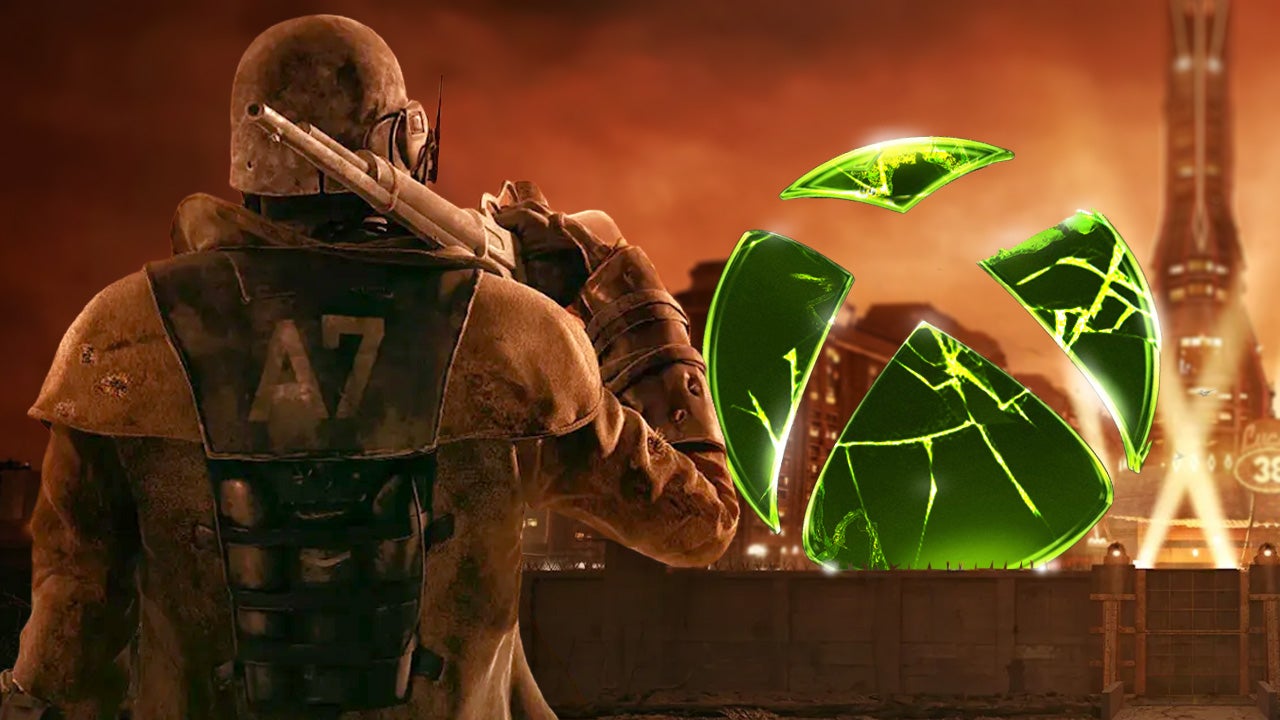
Obsidian and Bethesda are two beloved RPG studios that compliment each other beautifully, in the vein of all the classic double acts. Lennon and McCartney. Beer and nuts. Britain and Post-War Decline. By 2021, Xbox had acquired them both, which led many of us to believe that the holiest of holy grails was now on the cards: a proper follow-up to New Vegas, the acclaimed Obsidian developed Fallout spin-off that brought the series back to its wild west roots, while keeping and expanding upon the grand modernisation effort that Bethesda started with Fallout 3. The result? A game so adored that they’re now making an ultrabudget TV show that directly follows on from it, a game so highly regarded that many consider it the peak of what’s possible from either studio.
And so with these twin RPG stables nestled together under the umbrella of Xbox Game Studios, it seemed nailed-on that the people who now owned both the Fallout series and the best studio to ever do it would leverage that fact for money. And to sell some Xboxes, perhaps. What a concept. And, well, you know what, it looks like that might now be happening – a new report from Bloomberg’s Jason Schreier claims that Obsidian is now working on a new Fallout game, headed up by New Vegas’ director, Josh Sawyer.
But in perhaps the cruellest monkey-paw twist imaginable, this long-awaited new Fallout is happening in a way that nobody with any admiration for these studios, love of the Fallout franchise, or possession of any decency, can get truly excited about. Maybe when the dust settles on all this upheaval. But not right now.
Because, once again, Xbox has taken a machete to its workforce, cutting right through the bone of its most prestigious dream factories, as a decade plus of spinning its wheels under chronic mismanagement comes to a devastating but entirely predicted conclusion, while its parent company desperately sells the family silver in order to fund the most destructive gambling habit in human history. One that is, incidentally, making games consoles prohibitively expensive to make, meaning that for the first time in history, current gen machines are going up in price as they age.
So we all have to suffer. And activities that are actually profitable, like making video games and selling them to people, have to get gutted. The people actually responsible for video games, in many cases the keepers of crucial generational knowledge and expertise built up over careers spanning decades? Collateral damage. Artists. Engine coders. Writers – so many writers. Not a single one of them responsible for the terrible decisions that got us here, but somehow being made to pay the toll with their livelihoods. In contrast, those actually to blame for all this are earning golden toilet seat money: more than anyone needs or knows what to do with.
It’s grim. It’s unnecessary. It’s unsustainable. And it’s a frightening realisation of the ancient curse: Interesting Times, etc.
Xbox CEO Asha Sharma calls this the “Xbox Reset” – spun as a painful but necessary realignment of the business toward actually leveraging all the intellectual property that her predecessor collected like Pokemon but failed to really do anything with. Xbox studios now have a mandate to play the hits: more Fallout. More Elder Scrolls. More Halo. And, you know what, she’s right about this specific thing: it's something that should have been done years ago, before they laid off thousands of game developers. Had it been so, it would have been a lot harder for the current team to justify these sweeping cuts, to themselves or anyone else.
Under no circumstances do you gotta hand it to someone who just signed off on this much human misery, least of all someone who is in part responsible for the AI rainbow-chasing that has led to such chaos, but it is undeniable that Xbox has not been doing good business since long before AI was a factor in component pricing. Now, despite starting with more highway than China, they’ve finally run out of road: and the blame for this lies squarely at the feet of her predecessor.
The problem with many of Xbox’s acquisitions, as put succinctly to us by industry analyst Rhys Elliot recently, is that they were “brilliant for prestige and rotten for the spreadsheet”. And I think that might get to the heart of how devastating it is for the Xbox business to go from one extreme to the other in terms of leadership. Brace yourselves, because I’m about to do some faint praise for Phil Spencer, and I will have to have a lie down afterwards.
It would be wrong to say that Phil Spencer wasn’t like all the other executives. He was. He donkey-dashed after the carrot of infinite growth like they all do, and it led to all the same kinds of consequences. He’s no less culpable for the misery heaped upon this industry as demanded by the cult of fiduciary responsibility, of which he is a very well compensated acolyte. But I’ll say this for him: in stark contrast to some others who’ve had his job, he undeniably gives a shit about video games.
He cares about the medium. It’s well documented that he plays a lot of games, sinking hundreds of hours into them year on year. He knows what’s good. And I think a lot of his decisions were made with his heart, not his business head. Like, for example, his hands-off approach when it came to Xbox’s studio acquisitions. He understood that a game company isn’t just its IP portfolio, but its talent, its workplace culture, its overall character. Too much executive interference can dilute the magic of a place like Bethesda, Obsidian, or Arkane. We’ve seen it over and over again: in Lionhead, in Rare. The BioWare that exists now is a shadow of what it once was, having been ground down under the benefactorship of Electronic Arts. I think Spencer understood that, and wanted to avoid being responsible for another BioWare situation: buying something only to rob it of its real value.
And so he seems content to have let Bethesda carry on as an outfit that funnels all of its creative decision making through one, incredibly busy, director: Todd Howard, who seems unconcerned by the prospect of going a full twenty years between Elder Scrolls installments. Taking a long detour to make Starfield, a game that has its fans, but is widely considered to be a pretty rubbish substitute for Elder Scrolls 6, which remains reportedly another two years away. Instead of Fallout 5 being anywhere close to active development, we’ve got the TV show. A very good TV show, it has to be said, but TV shows don’t sell Xboxes. Just ask Don Mattrick. In amongst all this, Todd is somehow finding time to go and consult on Indiana Jones.
If this all sounds familiar it might be because over in the PlayStation camp, a similar phenomenon appears to have benched their star studio Naughty Dog for an entire console generation: I did a video about this a few weeks ago, about how funnelling everything through creative director Neil Druckmann in combination with an exodus of top talent appears to have stalled everything over there. Two signature franchises sitting idle. A space thing in the works that isn’t either of them. A popular TV show that appears to have sucked up all the momentum.
And look, I don’t begrudge either of them for wanting to do different things. I certainly don’t begrudge Todd Howard for, allegedly, wanting to be across every decision or taking as long as he can get away with to make things. That’s what creatives are like. I’m a creative, and I’m a pain in my boss’s arse.
But this is where you need the business guys to come in and start putting the foot down. The ones, like Spencer, who have a head for both sides of the equation of a creative firm. Someone who can speak LinkedIn to suits upstairs, and who understands that an artist under duress is not making good art. Neither of those encampments can be permitted to run the entire show, because that’s how you end up here, in a situation where a studio reportedly being instructed to get on with a sequel to the game everyone loves them for is a panic-button decision instead of the reason you acquired them in the first place.
Naughty Dog can afford to take a decade off because in the meantime, studios like Insomniac have massively stepped up with their take on Spider-Man, and the upcoming Wolverine. This is a great synergy of business and talent: a platform holder successfully leveraging two things it has at its disposal, in this case Sony’s long-standing relationship with Marvel and the Spider-Man franchise, and a development studio with tenure, which it eventually acquired.
It’s not a given that Marvel-based video games will be hits, sadly the excellent Midnight Suns is testament to that, but considering the massive crossover between gamers and MCU enjoyers, it’s as solid a bet as anything can be. And so it’s particularly biting that one of the potential casualties of all this is Arkane’s upcoming Blade adaptation. A classic Marvel property that people have been crying out for a new version of, paired with a studio known for its dark fantasy stealth action and visceral combat. A project in perfect marriage with a studio in desperate need of a big hit after much of its post-Dishonored output failed to connect with an audience.
Being unable to sell a Blade game made by Arkane reminds one of a certain phrase involving breweries and piss ups. As landlords go, Spencer and Sharma seem to occupy two extremes: Phil is the laid back one who lets you smoke in the gaffe, but is curiously nowhere to be found when the boiler needs fixing. Sharma is a lot more organised and “On It”, but her response to a large maintenance bill could involve anything from doubling the rent to burning the whole place down with you in it.
Asha, for what it’s worth, is making a lot of the right calls: albeit calls which should have been made years ago, when they might have mattered, when they might have shifted some Xboxes at a time when they had by far the cheapest current-gen console on the market, a prospect that now seems as distant as Marathon bars and white dog shit. Unfortunately, it could well be too little too late: with the Xbox brand being so damaged for so long under the follies of successive regimes, it seems like an unassailable mountain to climb, especially when there’s nobody left to carry the rope.
I never thought we'd end up in a place where we could be getting new Fallout from my favourite studio, headed up by my favourite auteur, and I'd feel bad about it. But then, we do live in interesting times. For years I've waited patiently for Xbox to stop spinning its wheels and start leveraging all those IPs. To actually make a case for owning an Xbox. That it took such bleak circumstances for them to do it is shameful, but I hope it works out in the end, because the industry needs a healthy Triple-A sector, with platform holders who aren't shy of throwing a bit of cash around. And, selfishly, because I don't want Elder Scrolls 7 to come after I'm dead.
But I’ll caveat that with: I’d rather it turn up when I’m dead, than be riddled with generative AI, which I desperately hope isn’t being mulled over at Xbox HQ as an answer to the question “how do we make all these games now that we’ve laid off thousands of people” with any sincerity. But given the parent company’s besottment with OpenAI, an infatuation expressed through doting press releases about Strategic Partnerships and enormous piles of cash, one images it’s coming up a lot.
Finding reasons to be cheerful after all this feels crass, not to mention naive, but if a silver lining is to be had it's that Xbox might now start doing what it should have been doing all along. Getting some Fallout made. Sticking a firecracker under Todd’s backside. And when the ship is righted, stop firing everyone who knows how to do things.
📰 Original Source:IGN
✍️ Author: Jim Trinca
Leave a Reply