I’ve played all of the God of War video games, including that one with the Reject Your Child quick time event, and that crappy mobile game from back in the Bush Administration. I played at least one game I only half remember of the God of War card game. I was a Kratos main in PlayStation All-stars Battle Royale. I like the guy, is what I'm saying, as a sort of cathartic avatar of the Id taken to its very tragic limits in Greece, and as a clunky conversation starter about guilt and finding power in something other than grievances in Midgard. But I can’t recall ever wondering “I want to know more about pre-Ares Kratos’ teenage years.” And as an answer to a question I would probably never ask, Sons of Sparta is a pleasant character rehabilitation of a largely unlikable guy couched in a largely boring adventure about Kratos learning the value of responsibility.
It’s also a pretty mediocre metroidvania, clearly taking the form and function of these games but failing to meet the high bar set by the titans of the genre, let alone bringing anything novel to this specific experience. You’ll move through colorful locations, doing the kind of running, jumping, button pressing, object pushing, and monster slaying that will be second nature to your inner Belmont, but you’ll do so at a pace so slow that it makes the journey feel like aimless wandering, fighting through hordes of baddies with combat that tries too hard to be special but ends up crowded and cloying.
I found this young Kratos to be a well-meaning, earnest guy piously (maybe naively so) devoted to the gods and the stubborn defender of his younger brother, Deimos. These are better times for the pair, who have just been granted permission to leave Sparta in order to adventure through and protect the surrounding lands at their own leisure. The well-written banter between them, and the other young people living in the Spartan agoge, reveals the Kratos that could have been, a charismatic, duty-bound leader that is tough when necessary, but also introspective, open to learn, and most jarring of all, funny.
Even the brief moments of pre-Ares pledge adult Kratos in Sons of Sparta, who is telling his daughter the happenings of the game as a fable while she’s grounded, reveal a man who actually has capacity to love his wife and child in the present, and not just be consumed by rage because of their passing. They banter back and forth in the background as notable in-game events go down, and the way Calliope will cast doubt on the seemingly tall tales of her father, or follow up on moments that either seem contradictory or wrong was charming in the way The Prince attempting to recount his journey in The Sands of Time was.
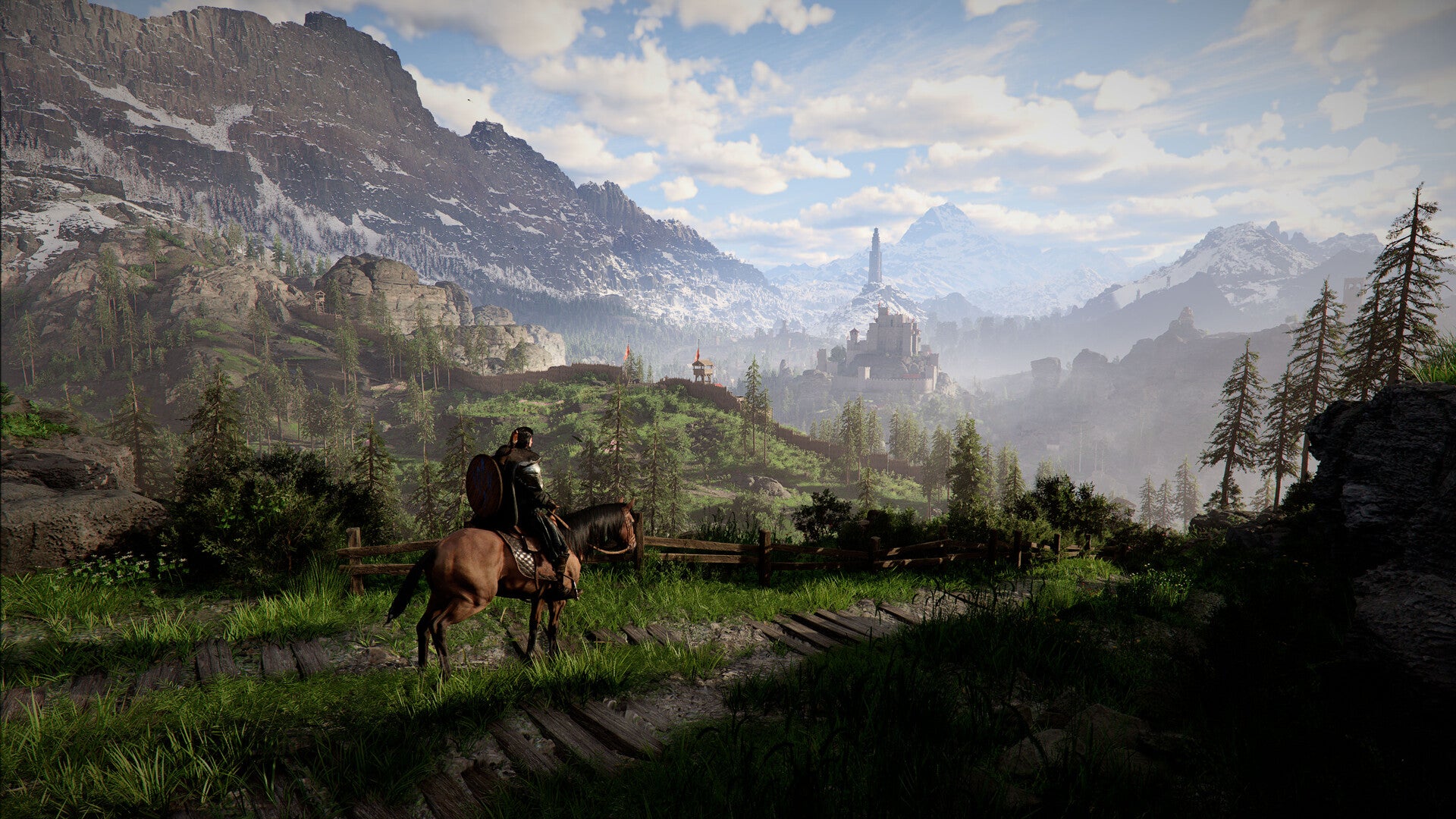
Ultimately, these don’t really save the story from feeling dull and rote. Sons of Sparta is full of interesting characters that you meet after long stretches of not very interesting travel and exploration. The many locations that Kratos and his brother romp through, like the fiery foundry of Daedalus or the dense and spooky Veiled Bog, look good but there’s nothing all that special or memorable about them. A lot of them seem to be begging to tell the story of what got them to the state they're in, like a haunted Winery that is covered in a goop and being possessed by Grecian Ivan Ooze, or a farming village where all of the residents have been replaced by cultists. But Sons is content with just marching you through a place in service of one long goal, to find a missing student of the Agoge, without stopping to elaborate on any of these side stories.
The around 20 hours of my journey was a lot of me wishing I could know more about a cool place I was in, knowing the best I was going to get was a blurb in the lore compendium, checking off every single Metroidvania trope without really any hope of seeing much innovation on the concept. The only “new” idea Sons has about the genre is when the player can expect to gain the signature abilities these games are known for. There's no explicit right or wrong time to gain mechanics, of course, but I went about 10 hours before gaining the ability to drink a healing potion and got a double jump a few hours later, things you might expect to do at the beginning of similar titles. But you spend so much of the early parts of Sons of Sparta running such rudimentary obstacle courses that every time I gained something like the ability to sprint, I felt like I had to wrestle through a fugue state to give it a fair shake.
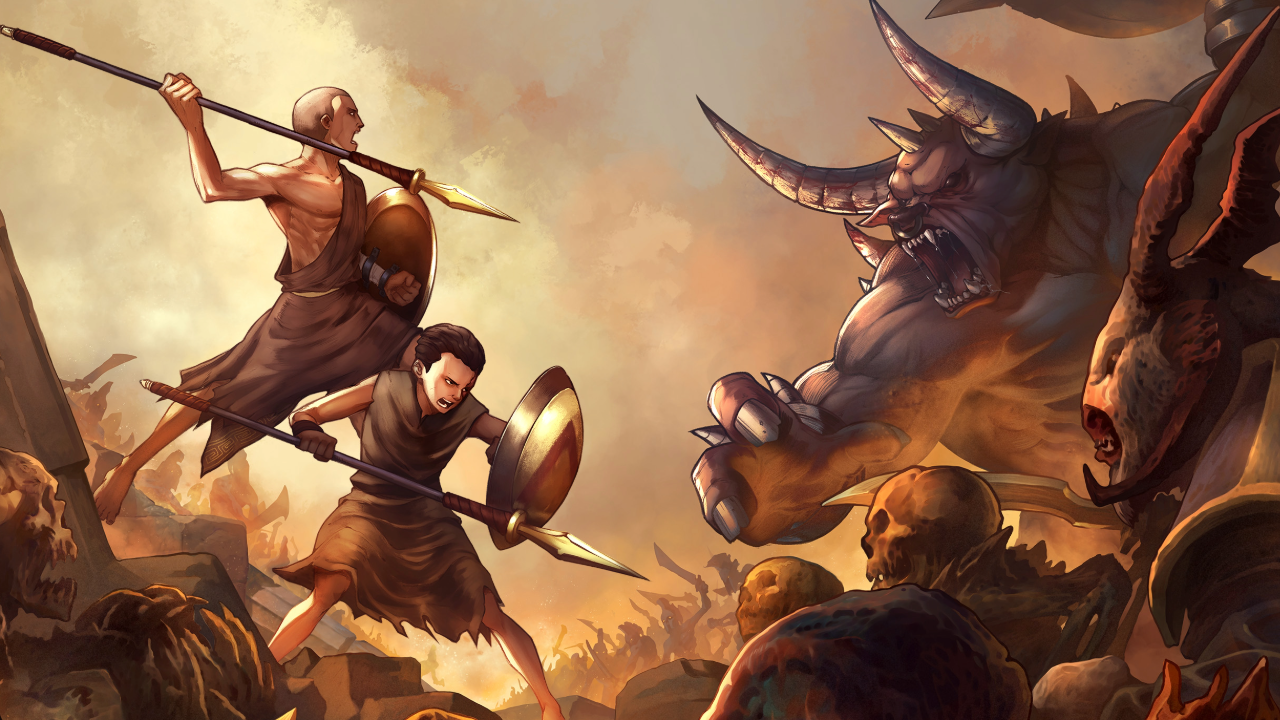
Combat, for better and worse, was the most reliably compelling thing going on for a lot of the game. Kratos has a lot of offensive options but none that really resemble the God of War’s barbarism. Armed with a spear and a shield, you'll mash a single attack string, poking and bashing enemies into submission. Normal attacks cause spirit orbs to float out of your targets, which fill your gauge that can be used to turn your blows into spirit attacks, doing less damage but generating health orbs and significantly more stun meter, which you want to build especially on stronger enemies as a stunned opponent is one that can be executed.
I immediately missed the attack paths of the other series’, that let you mix light and heavy attacks or control tempo with delay strings. Instead, you can equip different spear shafts that change your combo-enders, providing one big damage attack but very few of which stand out from one another outside of this. One adds a Brad Pitt-style leaping spear thrust that gives your combo a little more range, but I didn’t find fussing over the right last hit to be worth much.
Instead, the real effective ways to spice up your damage dealing comes from attaching different spear tips that add passive effects. They unlock active abilities as you upgrade them. Not all spear tips are made equal and there are clear stand outs, like one that extends your reach. The reach-extending one’s active ability made every attack hit twice for a brief period of time. These have a more dramatic effect on your playstyle than the shafts, but I rarely strayed away from this tip as it seemed to clearly be the most versatile. I didn’t find many opportunities to get the most out of some funkier ones like the poison tip or ice tip, which do damage over time and slow enemies, respectively, as they’re effects never gave me a clear enough advantage against tougher enemies that seemed just as dangerous under these conditions.
Pommels can be added to the bottom of the spear to give Kratos another active ability, these being more like special attacks that spend your spirit meter to do. The differences between these were more dramatic – one allows the spartan to deliver a flurry of thrusts in quick succession while another sends him marching, spear swinging in wide arcs around his body. I changed these up the most to adapt to challenges because each felt tailored to handling specific sorts of the threats.
The most dramatic offensive tools are those that come from the gifts of the god that Kratos and Deimos invite themselves to possess. These operate like spells that, mostly, give Kratos options he can’t get from his spear and shield – namely good ranged options like Apollo’s sling that lets you launch pellets of solid light at foes, or Hestia's shrub whose leaves toss bouncing flames. They also double as keys to specific sorts of locks that litter the vast world of Laconia, Apollo’s light can power specific generators and Hestia’s fire can burn away prickly bushes. But in combat, they are often your strongest and most restricted tool, limited by a magic gauge that can’t be refilled through your attacks like health and spirit can.
There’s quite a lot of ways to attack the enemies of Sparta, many little ways to modify these, and even more ways to grow and change these modifications through the upgrade crafting system. But so few of these options have remarkable gameplay consequences that incentivized me to explore past my early game habits. I didn’t even consider upgrading any of my spear tips past the level required to get their special abilities, and that was only just so I could see them in action. That isn’t to say the combat is easy, per say, but most of your most effective battle plan is to mash attack when able, after getting a safe moment or two to do so.
Enemies can be diligent and lethal, attacking often and in groups, requiring you to get pretty familiar with Kratos’ powerful defensive tools in order to survive. The parry is great for breaking up combos and putting stun damage on a foe, but it isn’t so strong that you autowin the skirmish after a successful swat, like some other games that might reward a good parry with a free execution. You still have to stay locked in, because the enemy will recover quickly to get back to the beating. Dodges, and the handful of follow up attacks that you can nail after, are necessities as well, and mixed together can make getting out of tougher binds feel rewarding. All of these actions can be modified or enhanced through equipment as well – shield rims can make counter attacks stronger or simply raise your armor and make you tougher to take down, for instance.
Bad guys get a little too cute with the kinds of offense they can dish out, though. Most action games feature enemies who flash red to denote an unblockable attack, but Sons of Sparta can feature enemies with a whopping four different kinds of special attack conditions, modifying whether an attack can be blocked but not evaded, ones that guard break but can be parried, or ones that you can defend in no way shape or form outside of simply not being around when it happens. This maximalist approach to defensive Simon Says creates too many variables in combat with lots of foes, and losing in scenarios where multiple enemies might hit you with different kinds of attacks at once always feels like whatever the Greek word is for bullshit.
Boss fights turn the screen filling attack machine up to 10, which is definitely a change of pace They don’t start getting tricky until about the last third of the adventure, but those baddies make you earn through extended chains of pattern recognition and reflex checking bullet storms. The easier ones in the earlier in the game can be more disappointing on the difficulty side, but what all bosses share is that they further remove the opportunity to take advantage of many of your offensive tools, since they seem to be largely immune to status effects and don’t have stun bars.
📰 Original Source:IGN
✍️ Author: Rachel Weber