
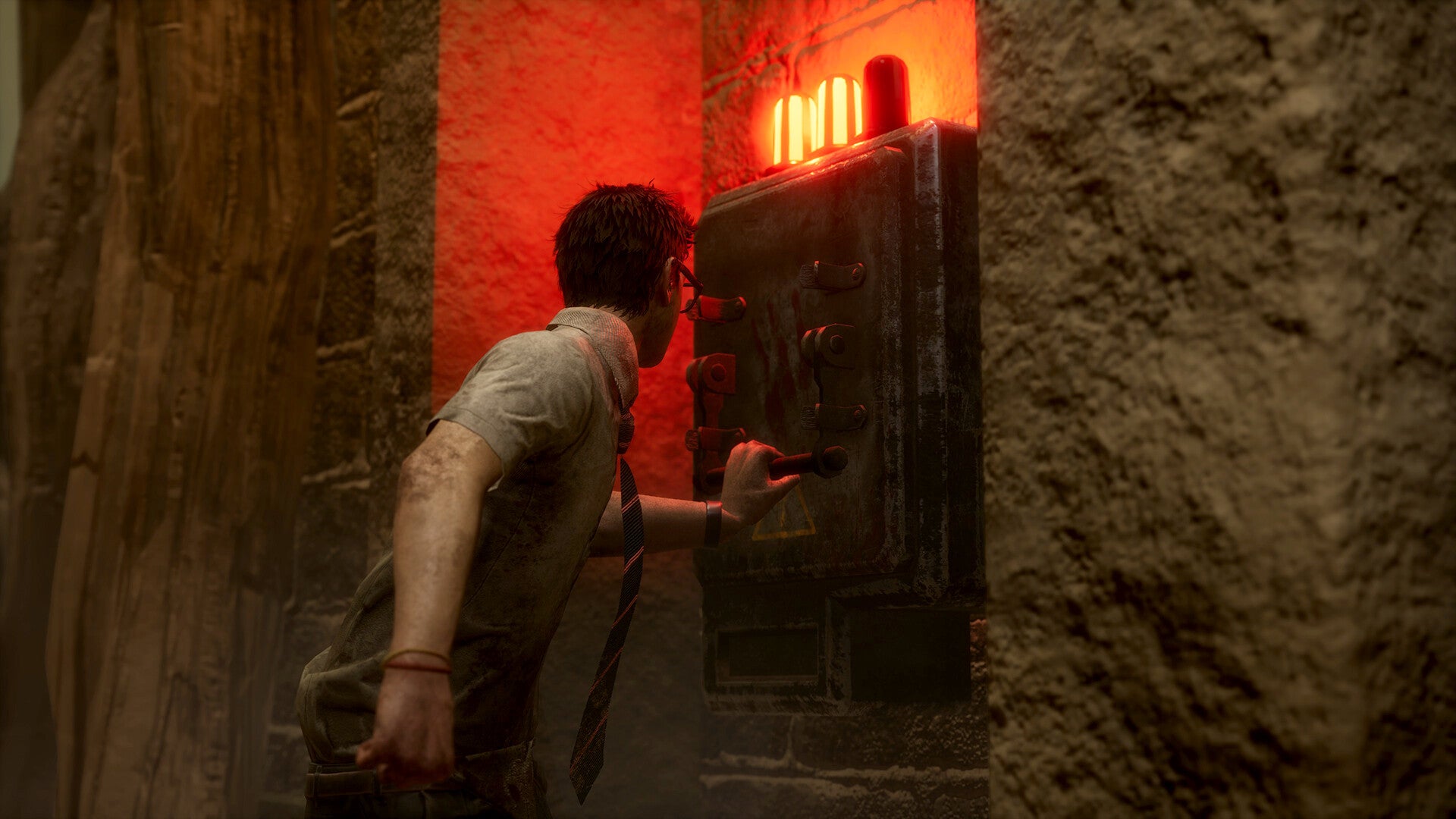
Stranger Than Heaven is both a major departure from and cut from the same cloth as the Yakuza and Like A Dragon games before it. Sega's RGG Studio uses many of the touchstones of its previous games to tell a more serious story about a hapa man in early 20th century Japan over the course of decades. It is tied to RGG's previous games, but it's meant to stand on its own. However, it's turned some heads with casting big names to lend their voice and likeness to its key characters. And the one that left everyone bewildered, was using the likeness of rapper Tupac Shakur, who has been dead for 30 years.
I walked into a dimly lit room with executive director and studio head Masayoshi Yokoyama sitting across at a bosses desk with a chair directly in front like I was either being investigated, or perhaps the interviewee. While it was fit to theme the vibe of Stranger Than Heaven, I had an open conversation with Yokoyama (through translation) at Summer Game Fest after getting my hands on the Stranger Than Heaven combat demo, and we talked about the shift in combat system, how extensive its world will be, and its story ties with RGG's previous games. And I shared my perspective on finding personal similarities with the protagonist Makoto Daito to find out more about the story. But the question on everyone's minds is: Why is Tupac in your game? Yokoyama had some interesting answers, ultimately leading to the conclusion that he believes this a good idea, but that he's not immune to criticism.

IGN: Take me behind the idea of moving to a very different combat system from what we've seen from other action-style RGG games.
Yokoyama: So, for games like Yakuza and Like A Dragon and similar games, if we wanted to make one like that or if this was just a spin-off the main series, we would have probably just kept the same system. This is intended as something that's completely new and from the start, we wanted to have a new combat system and we made something that would fit the story and the characters.
IGN: It's a very challenging system, more so than other RGG games. Do you have any concerns about making sure players are able to adapt to the new system or make sure that they like they're acquainted with what this game asks you to do with the new combat system that's pretty difficult?
Yokoyama: I think this goes for pretty much any game, players will adapt to it, so I'm not really worried about players having trouble with that. Learning a new system is part of the fun, and I think a lot of players will start and even if they're having trouble, they'll be interested in the story and that would push them forward. They'll want to have that feeling of progression from practicing this system and getting better at it. So I think in the end, it's part of the fun of the game.
IGN: One of the most interesting things is the game taking place in five different eras in five different cities. How are they built as worlds and how do we interact with them compared to Kamurocho [previous games' setting]? Especially in terms of substories, vendors, and minigames, how extensive are these cities with the things that you do inside them?
Yokoyama: In terms of the size and scale of each of the cities, each of them vary a little bit, but most of them are generally built to be around the same size as, like a Kamurocho from the other games that you might be familiar with. That being said, we didn't make this game in order to compare it to our previous game because it has a different sense of place in a lot of areas. One of the things that is really different about this one is that a lot of these places are a lot deeper. There are a lot more buildings that you can go into, a lot more density.
That being said, it doesn't mean that each one of them has an activity, we aren't trying to fill it needlessly with things that didn't exist during those eras. It's not like you go into a building in 1915 and do karaoke. Like, it doesn't exist, right? We are making sure that everything there fits the age, and it's a little bit more deeper.
IGN: It feels like Stranger Than Heaven is a more serious game. Not that any of the previous games weren't serious, those had very emotional stories, but Yakuza/Like A Dragon balanced having a comedic side and a serious side. It seems like Stranger Than Heaven leads much more into that serious side. Is that fair to say?
Generally, when we were working on this game, we wanted to focus on it being more of a serious story. Simply put, it is kind of a serious story overall – there's this character who is of mixed heritage who is trying to find a place in a world that doesn't really open up to outsiders, or people of that similar background. So, from the outset it is quite serious. And at the beginning of the story, especially, the main character goes through some really tough experiences. That is also a very serious opening. It's not like you play the game and suddenly play side stories with really stupid comedic stuff. There are fun, comedic moments, but it's very much more heavily meaning into a serious side.
In the beginning of the game as well, song is a very important aspect of the game. The characters walk around a town and he sings in English here and there. And that's one of the first times where he gets accepted by the people of the town, they applaud him, they give him money for his excellent singing. So, there is this sense of it being his path towards finding a place where he belongs and a path to be accepted. He meets a lot of friends through that as well, it's kind of what leads him to meeting more interesting people and friends who have strong backbones. That's a major focus, especially in side stories.
IGN: The concept of the game really speaks to me as someone who's half Filipino and half American. When I found out that the story is about a half-Japanese and half-American man finding his identity, I needed to know more. What kind of messages are you instilling in Makoto as a character, and where did that come from? What inspirations did you pull from? Do you have someone on the writing team who has that experience and are you also looking at themes during those time periods about how Japanese folks were treated in America? These are ideas that really resonate with me, so I want to know a little bit more about them.
Yokoyama: This is something I kind of feel about all of my works, that there is no particular message that I want everybody to feel from playing this game. Whenever I make a story like this, I think about what character and what story he wants to tell, not what message I want players to feel. One of the goals I've had throughout my career and in all these games was thinking about the yakuza as an organization and exploring where would they come from? What sort of things would birth this sort of organization? It's something we've explored for over 20 years. When people want to create a system or organization like the yakuza or the mafia, is it just to commit crime? Probably not. There are probably more base level or core inspirations behind that. And one of the ideas that we thought of is maybe it's like finding a family that created this, or maybe immigrants who are at the origin of some of these organizations historically.
But that was kind of the departure point from which I came up with the story or situations for this game. Like, if one of these characters in this era, say a character of mixed heritage who came to Japan, how would they go about creating a place where they belong? And in a lot of ways, I'm thinking maybe this is what would lead to something like the yakuza in the end, a journey not necessarily to do crime, but to find a place for themselves.
IGN: We know that the Tojo clan is at least part of this story here. Is there anything you can tell me about the idea of tying what we know from the Yakuza franchise? A lot of people look at Strangers Than Heaven and think maybe it's a prequel, but is there anything definitively you can share about how the story ties into everything we know about Yakuza and Makoto's connection with all that?
Yokoyama: This is something I can say very clearly for the Yakuza and Like A Dragon games – Stranger Than Heaven is very much the past of that world. We created this fictional kind of version of Japan with the Tojo Clan and everything, but this is very much not the story of the youth of the characters who appear in those past stories, but rather, the past of that world and how those institutions came to be. These are very much different people, though.
IGN: One of the interesting things is the specific jump between the two time periods in the story between 1943 and 1951. As you said, in the showcase, that it's a tumultuous time in the world, especially with Imperial Japan, and then World War 2 ending. That's a fascinating time period to set the game in; does Stranger Than Heaven look back at any of that and incorporate any of those historical elements? How does that play into the story you're trying to tell?
Yokoyama: So, in terms of the politics or overall history, we're not really here to talk about that and not what we're really focusing on, but rather we're focusing on specifically Makoto Daito's story. Anything that happens around his life and around in his story is something that we've focused on. Obviously there is that whole history happening in the background even in this fictional version of Japan, there's all this stuff going on in the world, but we can't talk about everything that's shown in this game right now. Our main focus is this character, what's happening to him specifically, what's happening in his particular world, and his slice of the world.
IGN: There are a lot of big names involved in the game, and with the reveal of Tupac, I want to ask, where did this idea come from? What was the decision-making process like, what were the legal routes to include someone who's been gone for so long in your game?
Yokoyama: In terms of the casting for the game, one of the first people we picked for the casting was Snoop Dogg. And he plays a really important part in this game. He's the character who leads people through Japan, he's kind of a smuggler, right? He's the one who connects the Western sort of aspect, and there are a lot of characters around with Snoop Dogg. So, he's the smuggler, he has his own ship, and there are other sailors and people he works with. So, we we're thinking, okay, we have Snoop Dogg's character Orpheus, but what are these roles that we need to fill? And we thought, well, Snoop Dogg is such an interesting personality in and of himself, there are a lot of people that he probably play off of, and we'll create characters that would interact with this character. And we're thinking about who related to him would be very interesting? We even talked with Snoop Dogg about this as well, and the name Tupac came up. We thought, okay, that would be a really interesting character to play off of Snoop Dogg.
Additionally, we already have had a character like Tupac, who had passed away before the game was made [the character Genzo Iwaki with the likeness of actor Bunta Sugawara]. He's a really famous actor in yakuza movies and Japanese film history. But it's kind of the same situation, he's this famous actor who passed away. But we made sure that we talked to his estate and family and got their permission; not just their permission, but we talked to them about what we wanted to do. They not only said okay, but they were really excited about the opportunity. We wanted to give their characters a role that would do other justice to the people themselves as well. If we didn't, we think that would be extremely rude, so we definitely wouldn't have done it otherwise. So we did our best to make sure that any role we create for these characters would honor them and their families.
The next barrier we faced when we were bringing them back for these characters for these roles was their voice, right? We probably couldn't replicate their voices with AI if we went for it, but we're a studio that has really valued acting, not just movie acting but also drama acting. And we're really careful about the voice actors we chose in the past as well. So, we wanted to focus on getting a real person to put their own spin on that character. We didn't want to have them just do an imitation of that character, we wanted them to try to bring out that character's personality, but with a different voice. So, we did our best to pick an actor that would fit the role and fit that character, and some of these people might be related to them or have some sort of relationship to them.
IGN: A lot of people have concerns about Tupac's casting here, you know, saying maybe he should have been left alone and maybe you shouldn't have done that. How do you respond to those criticisms?
Yokoyama: I think when you're creating any product in the entertainment industry, there's going to be criticism. You can't really say, "don't criticize us," that just doesn't make sense. Criticism is a freedom that people are free to have. But, this is something that we thought was a good idea. That this would be something that would add value to our game, which is why we chose to do this. I mean, we had a similar issue with this when we announced the casting of Sugawara as well. He's obviously a very famous actor in Japan, and there were a lot of people who responded saying like, maybe you should have left him alone. For Tupac, he's a person who's well known outside of Japan, and we expected those voices. But in the end, we are creating something we think people will enjoy and like. We think it's something that will add value to the game we're making. So, we have no real regrets or worries about what we're doing.
For me personally, I think trying to make everybody happy is the job of a politician. For a person who makes games, I think our job is to try to give an inspirational, emotional, or deep experience to as many people as possible. And if you try to make decisions just to avoid criticism, you will end up with something that can't do that.
Michael Higham is an editor at IGN who regularly contributes with reviews, previews, features, and news in written and video form. He's usually entrusted with covering long RPGs and tech products, but he's got range when it comes to games. You'll also catch him at events and hosting video content, including IGN's weekly podcast Unlocked.
📰 Original Source:IGN
✍️ Author: Michael Higham
Leave a Reply